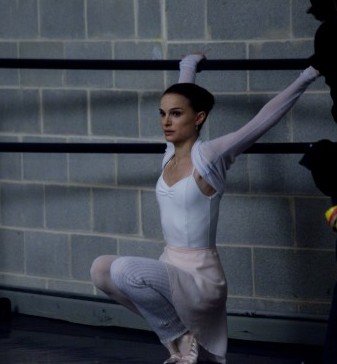
Showing posts with label Black Swan. Show all posts

Friday, May 13, 2011

Ballet Beautiful goes mainstream


Mary Helen Bowers Owner of Ballet Beautiful

The New York Times

May 11, 2011
By KAYLEEN SCHAEFER

Lining Up to the Barre

EVEN if you never intend to dance onstage at Lincoln Center, like Natalie Portman’s character in “Black Swan,” you probably want to look as if you do (minus, of course, her stab wound).

Women have long coveted sinewy arms, high and tight derrières, lean legs and a regal posture. Now, in search of this shape, many of them are ditching yoga and Pilates and lining up at the ballet barre. There are at least 10 ballet-based workout studios in New York City and countless others across the country, like Pure Barre or the Bar Method. Even chain gyms like Equinox have added barre-centered classes to their lineup. There’s no sign of the curtain falling anytime soon. Even FlyWheel, the popular spinning classes, added FlyBarre in December.

“Barre methods were popular before ‘Black Swan,’ ” said Mahri Relin, the head instructor at FlyBarre. “But then they were touted as something that made you look like a dancer, and that’s made them even more popular.”

At the front of the corps is Mary Helen Bowers, who trained Ms. Portman for the movie. A former professional ballerina turned fitness instructor, Ms. Bowers taught private clients her Ballet Beautiful workout method for two years before Ms. Portman found her. Then, for about a year and half, she accompanied the actress to various film sets as she prepared for “Black Swan.” (Of being in Northern Ireland while Ms. Portman was filming “Your Highness,” Ms. Bowers said, “Danny McBride has beautiful feet.”)

This month, she is opening her own studio in SoHo to take the Ballet Beautiful method to the masses — and supermodels, apparently. Last week, Helena Christensen sauntered into the whitewashed space for a private lesson. “What I’m doing is ballet-specific in terms of the body type,” Ms. Bowers said. “The program is made to give everyone access to that ballerina body.” For example, to replicate a dancer’s leg, she has clients strengthen their inner thighs, calves, and tops and insides of knees, but skip quads. “You can’t target your quad and expect it to be long and lean,” she said.

During most group barre classes, which cost $30 to $40 each, women focus on four body parts — arms, abdomen, gluteal muscles and thighs — with highly targeted, small movements designed to tone muscles without adding mass. “Go down an inch, up an inch” is an often heard command.

The basic technique isn’t new. It was devised by the German dancer Lotte Berk, who opened her Upper East Side studio in the 1970s (it closed in 2005), and many of the current barre methods are inspired by her. Some, like Core Fusion and the Bar Method, are taught by her former instructors.

Unlike your average ballet class, these aren’t quiet sessions filled with steely competitors. The atmosphere feels more like girlfriends gathering for long-overdue drinks. Most of the instructors do have professional dance backgrounds and use words like “passé” or “relevé,” but they also tend to be unintimidating and relatable — more sorority sister than prima ballerina. On a recent morning, Kate Albarelli, a former ballerina, led the 15 or so women in her Figure 4 class at Pure Yoga on the Upper West Side through a series of leg lifts as they held onto the barre. “Everything is engaged,” Ms. Albarelli said, before joking: “Except me. Yet.”

Jenn Falik, 32, a television style and beauty expert, who regularly goes to Core Fusion, a barre class in the Exhale Spa in Gramercy Park that’s known for being as calming as it is challenging, said that it’s sometimes like a social outing for her. “If I go at a popular time,” she said, “I know everyone.” (She noted, “I also love that you don’t get too sweaty so you don’t have to re-blow out your hair after a hard class. And I think secretly whether they admit it or not many devotees would agree.”)

Which doesn’t mean barre classes aren’t as hard. Most of the moves, like squats in a grand plié position with raised heels, are so intense that they will make your muscles shake and burn within minutes. “Some of these exercises are lethal,” said Fred DeVito, a founder of Core Fusion.

Even professional ballet dancers find them difficult. “It was so hard for me,” Ms. Albarelli said of her class at Physique 57, a barre studio known for its fast-paced choreography. “I was like, ‘What the heck did I just do?’ ”

Alicia Weihl, a former professional ballerina who is now a director of training at Physique 57, was also surprised by how hard she found her first class. “I thought I was so strong because I could dance on my toes for 8 or 10 hours, no problem,” she said. “I was shaking during the thigh workout. I could barely walk out of there.”

Mr. DeVito and his co-founder, Elisabeth Halfpapp, were the first instructors to break away from Lotte Berk — in 2002 after 22 years as instructors there — to start their own studio. “We feel like the mother and father of these classes,” he said. “I can go through the list, and everyone has lineage to the days back at 67th and Madison in that town house with Liz and me running the program.”

Today, the two aren’t bothered by all the imitators — or seeing socks branded with the names of other studios in their own studio (socks are worn to prevent slipping and to imitate a ballet slipper). “I look at it like yoga,” Mr. DeVito said. “The more styles of yoga, the bigger the program becomes, and the word just spreads a little more.”

Brooke Scher, a publicist at Alison Brod, appreciates the variety. She goes to both Physique 57 and Core Fusion. “I like to mix it up,” she said. “Even though they’re very similar, it’s a nice change of pace to do both.” She said the barre workouts, which she does four times a week, had radically revised her body. “My arms are a thousand times toner,” she said. “My core strength went from nothing to something,” she added.

“Every single inch of me has changed.” She paused. “Except I’m still not particularly graceful.”

Personal Comment: I'm glad to see her going mainstream for the non-dancers among us on the East Coast.

Saturday, April 16, 2011

Sarah Lane speaks out


Sarah Lane ABT Soloist

Sarah Lane speaks out: For those who missed the ten minute segment on 20/20 last night (Friday April 15, 2011) I thought it was an opportunity to hear Ms Lane and see her body language and hear the inflection of her words. I learned she has a small voice. Other than that there was nothing new. Her position is unchanged, that the movie studio under-represented the amount of the real dancing that she did for Natalie Portman. She actually said they lied about it.

Let’s assume that she is right, and that both Aronofsky’s and Lane’s statements can be parsed so they are both correct; that while 85% of the film is Portman most of the long dance sequences and pointe shots are Lane’s which I think may well be the case. Even then I think Ms Lane totally misunderstood how Movie Studios publicity machines work and finding out has disillusioned her.

Even now Ms Lane doesn’t seem to understand, that there was a major campaign under way for an Oscar and by her giving interviews talking about her role as Portman’s dancing body double she was diverting attention to herself and away from Portman. Hollywood and celebrity PR has never been known for sticking to facts and embellishing turns of phrase in publicity campaigns are as common as dirt. The 10 y/o Margaret O'Brien was said to be a rising ballet talent in the Film ‘The Unfinished Dance’ (with Cyd Charisse) in 1947. A more recent example is the actress Summer Glau. Her IMDB entry says: “She's been a prima ballerina most of her life.” OMG! Who would have known? The person who wrote that probably has no idea what a Prima Ballerina is! But that’s the nature of Hollywood publicity.

Anyway, Ms Lane is still disappointed that no one in the film industry is giving ballet attention of the sort she thinks the art deserves. She feels that Portman was given credit for more than she did. I don’t think that is the case any more than Angelina Jolie is given credit for the work her stunt doubles do jumping off cliffs, out of windows and from moving vehicles. And Ms Lane got as much credit as any other stunt double in any other film. Having ballet classified as a ‘stunt’ in film parlance may sound demeaning, but it isn’t.

I wonder if this incident has caused enough of a controversy that contracts for stunt doubles will be revised to include a clause about self promotional interviews and articles for some time after a project has been released to the public. Will continuing this tempest it toe-shoes sell more tickets and DVDs?

Black Swan at the box-office: Total Lifetime Grosses – As of April 17, 2011: Domestic: $106,909,414 36.3% + Foreign: $187,791,265 63.7% World wide: $294,700,679

The article from Entertainment Week.com about the 20/20 interview with a video clip from the interview can be seen: here.

Friday, April 15, 2011

Natalie Portman's Dance Double Speaks Out


Wendy Perron Editor Dance Magazine


"Natalie Portman's Dance Double Speaks Out"


You've read Wendy's original blog post that sparked the media frenzy surrounding Natalie Portman's dancing in Black Swan. Now hear directly from Perron and ABT's Sarah Lane, herself, as they discuss the controversy and why the public needs to know what it really takes to become a professional ballet dancer - lifelong training, dedication, and artistry.

ABC's 20/20 airs tonight at 10 p.m. EST. Check your local listings.

Visit www.dancemagazine.com to read more about Black Swan and Sarah Lane.

Personal comment: I’m sorry this is being posted on such short notice, but I just got the email with this information. I hope Wendy and Sarah spend their time discussing the work and dedication required to become a professional ballet dancer and not about Natalie Portman.

Thursday, March 31, 2011

A Tempest in toe-shoes Pt III


Darren Aronofsky and Natalie Portman

Entertainment Weekly
EW.Com March 28, 2011

'Black Swan' director Darren Aronofsky defends Natalie Portman in body-double controversy
by Adam Markovitz

Responding to claims that Black Swan star Natalie Portman didn’t do the majority of her on-screen dancing in her Oscar-winning role, director Darren Aronofsky released the following statement through studio Fox Searchlight:

“Here is the reality. I had my editor count shots. There are 139 dance shots in the film. 111 are Natalie Portman untouched. 28 are her dance double Sarah Lane. If you do the math that’s 80% Natalie Portman. What about duration? The shots that feature the double are wide shots and rarely play for longer than one second. There are two complicated longer dance sequences that we used face replacement. Even so, if we were judging by time over 90% would be Natalie Portman.

And to be clear Natalie did dance on pointe in pointe shoes. If you look at the final shot of the opening prologue, which lasts 85 seconds, and was danced completely by Natalie, she exits the scene on pointe. That is completely her without any digital magic. I am responding to this to put this to rest and to defend my actor. Natalie sweated long and hard to deliver a great physical and emotional performance. And I don’t want anyone to think that’s not her they are watching. It is.”

Last Friday, ballerina Sarah Lane told EW that Portman only danced 5 percent of the full-body shots in the film. She also claimed that one of the film’s producers asked her not to speak publicly about her work during Oscar season. Lane’s comments came after Black Swan choreographer (and Portman fiancé) Benjamin Millepied told the L.A. Times that Natalie did “85 percent” of the dancing in the film. Lane could not be immediately reached for comment regarding Aronofsky’s statement.

Personal comment: I think with the film editor’s counts “139 dance shots in the film. 111 are Natalie Portman untouched. 28 are her dance double Sarah Lane.” that is probably the end of the discussion. Although I don’t think it necessarily addressed Sarah Lane’s contention that “Of the full body shots, I would say 5 percent are Natalie” since there were a great many upper body and leg/feet shots that NP may have done and we don’t know what the editor included or excluded in his count of ‘dance shots’. Even so, I’m so sorry that Sarah Lane seems (to me) to be coming off in this whole thing as whiney.

Entertainment Weekly
EW.Com March 28, 2011

Mila Kunis blasts 'Black Swan' controversy: 'Natalie danced her a- - off.'
EXCLUSIVE by Adam Markovitz


Black Swan co-star Mila Kunis is speaking out in support of her friend and cast mate Natalie Portman amid accusations that the bulk of the dancing in Portman’s Oscar-winning role was actually performed by her dancing double, American Ballet Theatre soloist Sarah Lane. “Natalie danced her a– off,” says Kunis. “I think it’s unfortunate that this is coming out and taking attention away from [the praise] Natalie deserved and got.”

Kunis also says Portman has been honest about how much of the demanding footwork she was — and wasn’t — able to do. “She’ll tell you [that], no, she was not on pointe when she did a fouettés [turn]. No one’s going to deny that. But she did do every ounce of every one of her dances,” she says. “[Lane] wasn’t used for everything. It was more like a safety net. If Nat wasn’t able to do something, you’d have a safety net. The same thing that I had — I had a double as a safety net. We all did. No one ever denied it.”

Last week, Lane told EW that she performed 95 percent of Portman’s full-body dance shots. Portman has been defended vocally by fiancé and Black Swan choreographer Benjamin Millepied and director Darren Aronofsky, who insists Portman did 80 percent of the dancing in the film.

Personal comment: I guess Mila needed to get her name into the publicity. I don’t think the comment “Natalie danced her a– off” contributed much to the discussion, but her comments did show solidarity with the official, and apparently correct position, based on the film editor’s dance shot count.

More on Ballet sex by Jack: “I understand that one's posture and muscle tension in the legs, pelvis and back change when one is wearing pointe shoes. There is a quite similar change when one is wearing very tall heels with the difference perhaps that in the latter the weight can be carried on the heel and so the leg muscles are involved differently. But I would think that if the heel height is extreme the pelvic and back involvement is quite similar. And then there is standing on ones "tippy-toes", admittedly difficult for any length of time, but a similar muscular change would take place. Obviously ballet dancers stretch and strengthen their leg muscles so that this "unusual" posture is normalized so that they can stand, dance, and move about on their toes. I am not convinced that having "sex" in any of those three - pointes, extreme heels, or tippy-toes is very different. I'd think for a male it's hardly distinguishable. Of course someone who has developed more muscle control, her legs and pelvis can provide a different experience to her partner and herself presumably, but that would be true whether she was en pointe, in killer heels, or on her tip toes and so sex with a well developed female body is better than one that's not. We get it. I'm not getting it Jill, but perhaps I need to experience a side by side test so to speak. Ha-ha-ha That would be fun! Tester is blindfold for a double blind (ha-ha-ha) study.”

My reply: You recall that ballet sex was an outgrowth of the Paris Opera ballet dancers taking their lovers en pointe to offer a similar, tightened, grip to lovers that patrons experienced when frequenting prostitutes wearing high heels in Paris brothels. These days Strippers stilettos, ballet boots and pointe shoes all readily available for purchase. So a woman has a choice as to what level of skill she is willing to train for, to acquire a tightened grip to please a lover. To a true connoisseur of the female leg and the velvet vice of a ballerina’s vagina high heels then and now with the wearer’s toes flexed are not comparable to pointe shoes, because the flexed toes break the line of the leg and suggest that the woman in heels hasn’t the skill, muscles and stamina necessary to take a lover with her strongest grip while balanced on the platforms of pointe shoes. Even a woman in 5 inch stripper’s heels – which hold the wearer on three-quarter pointe - can’t compete and is relegated to third place behind ballet boot sex.

As to whether differences in the tightness and strength of the grip en pointe is distinguishable from when she is standing flat or is on her back it almost always is, but it depends on the woman, how long she has been taking pointe and how much time she spends on her toes. There are other considerations as well such as sexual experience and OB history, but the length of time she clenches her vaginal muscles, when she rises and remains en pointe, is a major indicator of how tight she will be. In some cases, me for example, I have to consciously concentrate on relaxing my muscles so a lover can comfortably enter me. But of course I wear Ban Wa balls or a Penetrator as much as I can, sleeping with the balls inserted when I’m not with a man or if he has taken me with them inserted, so I’m always training and exercising my muscles.

Monday, March 14, 2011

Perfect bodies & Summer ballet intensive


A ballerina with her perfect body on display

The Photo: A dancer exercising her nearly perfect unadorned Balanchine body during a private class. I’m indebted to Paul D for the photo.

Jack on perfect bodies: “Perfect Bodies While there are obviously different concepts of what a perfect human body form is there is more consensus then divergence on the matter. The ideal female form seems to evolve over time at least the Caucasian female whose ideal form is memorialize in art and sculpture handed down through the ages. Male form seems to have evolved less over time as we can see from the Elgin marbles right through to the Renaissance in Michelangelo's David. We can certainly see a series of rapid changes in the ideal female in from the 19th century to the present when some of the great choreographers such as Petipa emerged and reinvigorated interest in ballet. There appears to be a divergence in the artistic form of the dancer from the common vernacular of pop culture and the cartoon like form of pornography and erotica. These may each represent a different ideal forms and appeal to different sensibilities and lifestyles. Cosmetic surgery has presented the opportunity to literally resculpt the body into almost any form desired. And then there are the adornments which are used to enhance the female form. Clothing, of course comes to mind as the most obvious means to change, amplify, de emphasize parts of the form. And then there is hair which becomes part of the form and that is a whole other discussion. Jewelry, makeup and now tattoos are very much connected to and part of the female form. For something like ballet aside from story ballet with costuming jewelry, body mods, tattoos would be considered "blasphemy" as the pure unadorned form is an ideal which can only be lessened by such things. The body mod aesthetic and sensibility is so randomized and chaotic it defies the notion of a perfect form. Some women place symmetrical patterns of ink in their bodies which others use their skin for a canvas to portray an image or even write a message in text. Piercings and implants are placed in an almost defiant manner as if to challenge the very nature of conventional thinking about beauty. And much of this stuff is seen on some of the most stunning natural beauties. Is this an attempt to separate themselves from some sort of iconic mold and provide their own identity? Is it an attempt to demand that we see beauty as deeper than the surface of the skin or the shape of it? Is it an effort to engage our own skin and bodies and senses in a more expansive manner then a blank canvas? All the bod mods and tats certainly do destroy the notion of what an ideal female form would be. Personally I find the development off putting and jarring to my aesthetic sensibilities. Yet the fetish community which seems so body conscious incorporates bod mods almost as a fetish to be celebrated. It's a mad, mad, mad world. Ain't it?”

I totally agree with the Jack when he wrote: “For something like ballet aside from story ballet with costuming jewelry, body mods, tattoos would be considered "blasphemy" as the pure unadorned form is an ideal which can only be lessened by such things.”

The worst technical and esthetic error in the film Black Swan was the tattoo of wings on Lily’s back! No mainstream ballet company, much less a major one, would stand for tattoos where they can be easily seen in revealing costumes. ADs even hate tan lines from sunning in swimsuits so tats are a huge no-no! To my mind beautiful soft unblemished skin is one of our most glorious assets.

Auditions for places in St Lucy’s ballet program: It’s time again for auditions for St Lucy’s ballet Summer Intensive. We will accept videos, but prefer the prospective student to appear in front of the judges in person. A reader asked why parents would want to have their daughters take ballet at St Lucy’s when they could (possibly) attend ABT’s JKO School or NYCB’s SAB. The answer of course is that the goal of St Lucy’s ballet training is far different than turning out superbly trained professional dancers.

Our Summer Intensive is intended to assess and increase the skill and stamina of aspiring St Lucy’s students and is the primary source from which new students are invited to enter our ballet program. At St Lucy’s a solid background in classical ballet technique and a well toned ballet body is the foundation necessary for a student to successfully master the more advanced sexual techniques and skills for which St Lucy’s graduates are coveted as wives and mistresses. Training a student’s intellect is a primary goal at St Lucy’s so she can move confidently up through the business and social world and many students enter with just that as their goal. But a significant percentage recognize the ability to successfully compete for and retain the best mates is extremely important as well and our ballet and ancillary programs are designed to meet that need; to allow a graduate to so mesmerize a chosen male with her body, guile and erotic skills that he will stay bonded to her for as long as she wants him.

Given the importance of ballet in the development of a St. Lucy’s girl it’s understandable that there is intense competition for spots in the program. We have increased the size of the program this year, but not the size of the classes. We had been turning away so many well qualified girls that there will be no reduction in the skill levels of graduates successfully completing what has come to be thought of as the ‘Giulietta’ suite of courses, named for the courtesan of that name played by Ludmilla Tchérina in the 1951 film The Tales of Hoffmann.

Monday, March 7, 2011

Black Swan & mental disorders

Black Swan: Lily and Nina, girl’s night out

'BLACK SWAN': Psychiatrists Diagnose Ballerina's Descent

by SUSAN DONALDSON JAMES
ABC News Posted on December 20, 2010 at 12:03 PM

(ABC News) - Black Swan, a new psycho-drama anchored in the competitive world of ballet, is getting as much analysis on the psychiatrist's couch as it is Oscar buzz.

The Golden-Globe nominated film takes viewers deep into a ballerina's descent into madness in a frightening portrait of psychosis that doctors say resonates realism.

Nina Sayers, a fragile and repressed ballerina, played by Natalie Portman, strives for the lead in Tchaikovsky's "Swan Lake," a role that will require her to play both the gentle white and the seductive black swan.

But in the process, she will have to shed her "sweet girl" persona and embrace her darker side to fully embrace the role and to please her demanding and sexually aggressive director.

Her metamorphosis is so complete, that Nina eventually develops webbed feet, bird-like legs and sprouts feathers and wings to actually become the black swan.

"It was intense and disturbing and fascinating and mysterious," said Nadine Kaslow, vice-chair of the department of psychiatry at Emory University and psychologist to the Atlanta Ballet. "What was a hallucination and what was real? When people are psychotic, it's difficult as a therapist to know what's real and what's not."

Nina, who constantly strives for perfection, lives with her controlling mother Erica, played by Barbara Hershey, who gave up dance to have her daughter in a tiny New York City apartment, cluttered with her mother's narcissistic paintings.

When artistic director decides to replace the aging prima ballerina for the new season production of "Swan Lake," Nina is his first choice. But she has competition in new sexually open dancer Lily, played by Mila Kunis.

After securing the role, Sayers is asked to "lose herself" to play the black swan, and so she does.

In visual hallucinations, she sees a black-clad version of herself across the subway platform and again in the maze of hallways at Lincoln Center. Even the pink stuffed animals that adorn the bedroom she shares with her neurotic mother seem to come alive and mock her.

"As a movie fan, it held my attention," said Dr. Steve Lamberti, associate professor of psychiatry at University of Rochester Medical Center. "It was poetic in a way, showing this transformation gone wrong."

But speaking as a psychiatrist, Lamberti said the film did not accurately depict schizophrenia, as has been widely speculated, but "does present a reasonable portrait of psychosis."

"People tend to be scared of things they don't understand," he said. "If you have never treated or observed a person with psychosis, it's upsetting."

Psychosis is a loss of contact with reality that usually includes false beliefs or delusions, and seeing or hearing things that are not there.

Like a fever, psychosis is a symptom rather than a disease, and can be caused by a variety of triggers: exposure to mercury (the hats of the Mad Hatter were impregnated with the heavy metal), drugs like amphetamines, epilepsy, a brain tumor, dementia or psychiatric disorders like schizophrenia.

But unless psychosis is due to neurological causes, patients normally have auditory, rather than visual hallucinations.

"In terms of cinematography, it's much easier to portray the visual," he said. "Whispers are not nearly as dramatic as seeing something."

Several risk factors that may have made the fictional Nina susceptible to psychosis if she had a genetic vulnerability, said Lamberti.

"Natalie Portman's character was involved in a highly stressful competition, she had conflicted relationships with her mother and with her understudy, and she was the object of sexual advances by her director," he said. "Any one of these issues alone would be stressful but experiencing all of them at once could be emotionally devastating, particularly for a young woman who is somewhat naïve and sheltered."

Ecstasy, a powerful hallucinogen that Nina and Lily take in one scene, can also trigger a psychotic event.

Lamberti also suggests that the repeated vomiting and weight loss in the days leading up to her final performance may have caused an electrolyte disturbance that could have contributed to the psychosis.

The film took liberties with a host of anxiety disorders: anorexia, bulimia, cutting and obsessive compulsive disorder -- most of which would not all appear together, say psychiatrists.

Nina is meticulous about preparing her slippers, lining up the make-up in the dressing room and washing her hands at each turn. Viewers see hints of anorexia as she stares at a simple pink grapefruit for breakfast and turns away the fatty cake her mother buys to celebrate getting the coveted role.

Nina also makes frequent bulimic trips to the bathroom to throw-up. Her scratching and cutting is hardest to watch - blood oozes from her fingers as she rips off old scabs.

Director Darren Aronofsky has a "wild imagination, according to Jonathan Abramowitz, associate chair of psychology at the University of North Carolina at Chapel Hill, who specializes in obsessive compulsive and anxiety disorders.

"It would be fairly rare to have a psychosis and an eating disorder. People in psychosis are not in touch with reality. With eating disorders and OCD, they are too in touch with reality."

Psychosis Usually Involves Auditory Hallucinations

Psychosis, particularly in schizophrenia, involves negative symptoms, as patients start "slipping away from contact with reality," he said. "They don't care about social interactions and what they look like and speech starts to deteriorate. It's the polar opposite with anxiety disorders and OCD."

Those disorders abound in the dance profession, according to dance psychologist Nadine Kaslow, who continues to perform and teach.

"The world of ballet is intensely competitive," she said. "They over-exercise and eat very little. Anorexia and bulimia are extremely common. It's not as rampant as it was 20 years ago when we saw people get sick and die. But there is still a lot of controversy over how thin you should be."

Cutting is occasionally seen and substance abuse, particularly with drugs that help the dancer lose weight or keep up energy, is widespread.

"It's all about perfection and you can never be perfect," said Kaslow. "But the demand for it is off the charts."

The exploration of bisexuality was also intriguing in the ballet world, where men are often gay and where women's physiques are more childlike.

"The ballet world gives you such a message to look like a child," she said. "They are pretty flat-chested and they look like kids. The notion of being sexual or being a woman –- it's not uncommon to struggle with that.

But could Natalie Portman's character have carried off the demanding ballet performance in a psychotic state? Doctors say it would have been "unlikely."

"Psychosis usually interferes with a person's ability to function," said psychiatrist Lamberti. "However, artists and musicians have been known to perform despite the presence of psychosis. For a dancer who is trained to cope with pain and other distractions, it might be possible to perform in a psychotic state depending on the severity of the psychosis.".

"It may be possible for them to cope to an extent at a pretty high level, but it's not typical," he said. "Still, human resilience is remarkable."

For more information on OCD and anxiety disorders, go to the OCD Foundation or Anxiety Disorder Association of America.

Personal Comment: I was pleased to read that a number of psychiatrists agree with my own analyst, a knowledgeable follower of classical ballet, who thought the Black Swan fairly realistically, portrayed a ballerina’s mental deterioration. Since film is primarily a visual medium he thought her psychosis – hearing and/or seeing things that aren’t there – depicted through visuals of her delusions was handled very well. He also thinks that Nina seemed to have conflicting mental problems, but thinks it might be because she was developing a second personality and each of them had its own set of disorders. I am indebted to my reader, the mysterious ‘J’, for bringing this article to my attention.

Saturday, March 5, 2011

Toni Bentley reviews Black Swan

Natalie Portman in “Black Swan.”

“The movie provides the most recent -- though most egregious -- example of the “ballerinas-are-victims” stance that certain good Samaritans love to embrace,” writes Toni Bentley,

Why I posted this review:
I admire Toni Bentley immensely for her knowledge of ballet and her ability to translate that knowledge into words on paper which make her books fascinating reading. So it is with sadness, but understanding, that I read her unfavorable review of the film Black Swan.

Dancers are very self-critical always seeing flaws in their own performances and trying to improve and that hyper-criticality will sometimes spill over to their non-dance lives. I have some dancer friends who are unable to relax and enjoy a dance performance from the audience. They are continually watching for missteps, errors of commission or omission by the performers, to the extent that they can’t enjoy the performance. I think for many dancers who didn’t like Black Swan, that is what has happened. In critiques you read: Portman isn’t a ballerina… No one who only trained for a year can adequately portray a body that has been trained for 15 years… There is not enough dance… Most dance scenes were shot from the waist up… Ballet isn’t all rabid ballet moms, bloody toes, eating disorders and predatory Artistic Directors. But no one denies that these things exist in ballet and many dancers and devoted ballet fans dislike having that pointed out in a popular film. And many hate the idea of using the duality of Odette / Odile in Swan Lake as the frame story on which to hang a dramatic psycho-thriller of a dancer going insane. Toni Bentley wanted an entirely different film and she didn’t get it. Even so, I think this review is worth reading. I am indebted to J for bringing this review to my attention.

THE DAILY BEAST

Butchery at the Ballet

by Toni Bentley
February 25, 2011 8:48pm

“Oscar and audiences may love Black Swan, but one former New York City Ballet dancer thinks it’s nothing more than “balletploitation.” Author Toni Bentley explains why Darren Aronofsky’s psychological thriller is insultingly off pointe.

I have tried to avoid writing about Darren Aronofsky’s pirouetting parody Black Swan, but, having been a professional ballet dancer for George Balanchine, I keep getting asked what I think of the movie. And now that it has garnered a huge audience, numerous passionate fans and five Oscar nominations, it is time to put on my toe shoes, wrap my ribbons, paint on my four-inch black eyebrows, lace-up my wet-tutu suit and take a grand jeté into Aronofsky’s swamp. I mean lake.

I first saw this film at a screening last November, before it opened to the public. I had high hopes: Aronofsky had done a great deal of homework on the “ballet world,” consulting with many dancers, myself included. Reading the script a year or so previously, I’d been baffled by its reductive simplicity. But, hey, I thought, what do I know about script writing—and Aronofsky and his people seemed like earnest folk.

The film opens with a gorgeous low-lit scene of a ballerina’s beautiful legs and feet ensconced in the shimmering satin sheaths that are the art’s greatest symbol, dancing to the great soaring strains of Tchaikovsky’s passionate score. Oh goody, I thought, I will be swept away by this: the magic, the music, the beauty, the lines, those hypnotizing arched feet that skim the stage on their toes like purring paws (the ballerina was, of course, not the film’s star, Natalie Portman, but her double, Sarah Lane, a real dancer from American Ballet Theatre.)

Unfortunately it proved a terrible tease—the only lyrical moment in a film ostensibly about a lyrical art prior to the onslaught of histrionics that ensue.

One hundred and eight minutes later, as the movie ended, the friend I took—not a dancer—turned to me and asked in all seriousness, “Was that supposed to be camp?” There, on the screen, was a beautiful, bleeding-into-her-tutu Portman as the White Swan, uttering those portentous dying words: “Perfect . . . It was perfect.” As a dancer, I have never been so perfectly insulted.

I had thought when I read those words in the script, this is really stupid simple (the opposite of wicked smart, I would venture), but maybe Aronofsky has one of those things you hear film directors sometimes have: a vision. This was the vision? A dead ballerina in a bloody tutu with the caption “It was perfect”? He could not possibly be basing a film on a ballet dancer—the most fleet, complex, and powerful artist of the physical that exists—and the great 19th-century love story that is Tchaikovsky’s Swan Lake by reducing it to one crazy girl’s addiction to perfection. Or could he? Is this how he sees our art? Like a profession full of self-destructive addicts that need an A&E Intervention, a Dr. Phil “How’s it working for you?” talk, or an Oprah bailout? Aronofsky totally missed—or dismissed—the love story that is the raison d’être of the entire ballet and, instead, myopically latched on like a pit bull (and with the same finesse) to the White Swan/Madonna-Black Swan/whore dichotomy and then delivers his sophomoric dissertation with a sledgehammer. He does, however, clearly delineate his Cygnini discoveries: a White Swan masturbates in white grannie panties, while a Black Swan goes (black) thongless into the night. (Aronofsky clearly has a penchant for mutants: his next film is The Wolverine.)

Black Swan provides the most recent—though most egregious—example of the “ballerinas-are-victims” stance that certain good Samaritans love to embrace (“those dancers are too thin, they are just too too thin”) on occasion to aggrandize themselves, while patronizing those superb creatures whose absolute commitment to excellence they cannot understand. Ballet is the practice of physicalized morality, a poetic standard for every man and woman's ideal capacity," wrote Lincoln Kirstein, who founded the New York City Ballet with Balanchine. To imply that its proponents, dancers, are victims rather than teachers provides swift avoidance of that uncomfortable suggestion. Aronofsky has created a movie celebrating the failure of a ballerina, and by implication her entire art—disguised, insidiously, as a film about sacrifice and success.

As Black Swan so clearly demonstrates, one simply cannot “act” being a ballerina. It is a state of being, of feeling, of mind, an externalized expression of internalized discipline, faith, and good manners.

But I am too harsh. Perhaps Black Swan is simply Aronofsky’s bloody, melodramatic, nonsensical, middle-of-the-road, badly-written bid for box-office success after he tasted its heady brine with the success of the excellent The Wrestler. It could have been such rip-roaring good fun (see Jim Carrey's rendition from Saturday Night Live). And a real nice break from the dull, repetitive, hard work of a true ballerina. But then Black Swan isn’t a film about real ballerinas at all, no more than Jurassic Park is a film about real scientists (or real dinosaurs for that matter)—it merely exploits the locale, the props, and the outerwear. Balletploitation is born.

This brings us to Aronofsky’s heroine: his waify, whiny, bulimic little ballerina, Nina Sayers. Don’t you just love her? The little swan who simply couldn’t fly. And then we hear—over and over —that poor hard-working Natalie Portman had to actually lose weight and work really, really, hard—I mean really hard—for a number of months to pass, barely, as a professional dancer in the film, and only then between her neck and waist (don’t look further down: it isn’t there. Even her double—the one who actually did work really hard for several decades—is hardly on screen). A ballerina without her legs and feet is like a writer without words or a singer without a voice: not one. No wonder Portman looks so beleaguered in the film: she is perhaps the first amputee professional ballerina. But, hey, it’s Hollywood, and she has already won a Golden Globe and will likely garner an Oscar for her dorsal efforts. (Her upper-body-only performance does, however, enable her to wear the first strapless tutus in dance history.)

“The world of ballet,” Portman told French Vogue after making the film “is sick, sick, sick.” Portman, however, has bravely overcome her distaste and is marrying, and reproducing, into the profession all the same. Portman is a lovely actress of considerable accomplishment in other films, but here her one-note earnest angst, denoted by furrowed brow from start to finish, is entirely unlike any real ballerina—a woman who “must have the nobility of a five-star general,” as Agnes de Mille once said—rather than Portman’s insecure little misery. As Black Swan so clearly demonstrates, one simply cannot “act” being a ballerina. It is a state of being, of feeling, of mind, an externalized expression of internalized discipline, faith, and good manners. And of course, one needs those inconvenient legs and feet.

While the result is one almost hilariously sensationalistic movie (Aronofsky even misses being either high or low camp), I have a sneaking suspicion that the director wanted his film, at least in part, to be about the Birth of an Artist. He wants to bludgeon his tutu and wear it too. In straddling his themes—a serious film about the making of an artist, and Psycho at the ballet—he misses both, and flaps around in no swan’s lake.

This, of course, the public is lapping up, especially, I surmise, the vast audience caught in the fangs of vampire love (the Twilight books and movies, True Blood, The Vampire Diaries.) Black Swan has all the same seductive red, white and black elements of blood, innocence, and death delivered with risible solemnity and repressed sexuality. Nosferatu gets a tutu! Besides, there is nothing quite like white feathers and tulle to slowly absorb and spread the blood of a nice deep, suicide stigmata. And what did Nina stab herself with? Oh yes, a shard of her smashed dressing room mirror. I get it, I get it, the mirror murder, death of narcissism by narcissism (the buzzword for those obsessive ballerinas.)

I don’t care in the least that Aronofsky’s depiction of the ballet world and its anxious protagonists uses every blatant cliché about this rarified world, where anorexia, bulimia, self-mutilation, suppressed sexuality (but lots of attempted masturbation!), jealousy, stage mothers from hell, and vulgar, violent, lascivious company directors predominate. And don’t forget the requisite bloody toe close-up. Ewww! (For the record: A bloody toe for a ballerina is like a bruise for a boxer: ho-hum.)

Aronofsky displays neither respect, nor wonder, nor fascination, nor, alas, love for ballet in his film—he sees only half-clad wacko women: all four women in his mutilating misogynistic fetish are uber-crazy chicks. Predictably, he also repeats the truly absurd notion that a young female dancer needs drugs, alcohol, a wild tattooed girlfriend, and pick-up sex to the din of deafening disco music to “loosen up,” to be sexy and alluring on stage. This is a shameless manipulation (hello Hollywood!) to give regular teenage girls a point of connection to those rarified creatures. But the fact remains that reckless, self-destructive girls are simply not the ones who succeed in ballet—they are dropouts who must go to college. Aronofsky did, however, almost win me over with the prospect of skinny crazed lesbian ballerinas in sex scenes with themselves and each other (how else to get men to a movie about ballet?) But even here, the scenes are both passionless and humorless.

Despite all this—or, more likely, because of it—Nina Sayers is the first crazy ballerina to have reached across the elitist wall of the ballet convent into the general public’s awareness, since 1986 when our own bona fide great ballerina Gelsey Kirkland wrote her bestselling memoir Dancing On My Grave (could have been Aronofsky’s title). Kirkland’s real-life drama did include starvation, vomiting, drug addiction, rivals, failed plastic surgery, multiple obsessions, and bad sex with Baryshnikov. (Kirkland was diagnosed by the world-renowned analyst Dr. Otto Kernberg as having borderline personality disorder while under his inpatient care.) Suffice it to say that no real ballerina, Kirkland included, would survive, much less succeed, with such an illness. It is important to note that Kirkland was a very great ballerina before she unraveled—not, sadly, after.

What is even sadder is that the only glimpses of the ballet world that most of the general public sees—and then believes—are these extreme aberrations. I have heard it said of Black Swan’s popularity: “But at least ballet is going on people’s radar.” Better ballet stay off their radar, if so inaccurately represented as a world of insane perfectionists, rather than what it is: a world of masterful devotees to beauty.”

Toni Bentley danced with the New York City Ballet for 10 years and is the author of five books including “Winter Season, A Dancer’s Journal” and “The Surrender, An Erotic Memoir.” She is a Guggenheim Fellow, and her story “The Bad Lion” was recently published in “Best American Essays 2010."

Sunday, February 27, 2011

The 2011 Academy Awards


Natalie Portman’s Black Swan ballet trainer Mary Helen Bowers of Balletbeautiful.com

BalletBeautiful: I’m not in the habit of recommending other peoples ballet training regimens. However, Mary Helen Bowers Balletbeautiful.com: http://www.balletbeautiful.com/ did an amazing job working with Natalie Portman as her trainer for Black Swan. Women who are serious about working to develop lean long muscled bodies can’t go wrong having her as a trainer. About Mary Helen Bowers:

She began studying as a full scholarship student at the School of American Ballet in Manhattan at age 15. She was invited to join New York City Ballet at age 16. She danced for 10 years with the New York City Ballet at Lincoln Center and on stages all over the world. She graduated from Columbia University with a Bachelor of Arts in English Literature. And, she created Ballet Beautiful™ method as a highly targeted and effective approach to fitness. At the heart of the Ballet Beautiful method is Mary Helen's expertise; the exquisite grace, beauty and strength that are the essence of a ballerina's form.

The 2011 Oscars: I’m having a small group of friends over this afternoon to watch the 2011 Academy Awards presentation. Usually it doesn’t make much difference to me what pictures and actors and actresses win but this year I have two dogs in the fight. My picks are:

The King’s Speech for best film

Natalie Portman for best actress in Black Swan

Colin Firth for best actor in The Kings Speech

Long time reader’s may recall that my mom was English and my biological father (Great uncle John) was Welsh, so I’m predisposed to favoring inspirational films about the Brits. I think The Kings speech has greater appeal – to the Academy – than Black swan.

I hope I’m wrong, but I think the film The Kids Are All Right with Annette Bening will probably win best picture and Bening best actress as I fear the film has more general appeal to the Academy. Sigh!

Update: I’m delighted to say that I got three for three (above) of my Oscar pics for this year!

People my age and younger don’t realize what a tremendous role-model King George VI was to the English people during WW II. The story of the Kings Speech provides some insight into what went into helping George VI be the leader he was.

I’m so pleased that Natalie Portman got the recognition she deserves for her frighteningly realistic portrayal of a ballet dancer who deteriorates mentally under the stress involved in competing with rivals for the lead in Swan Lake and in making the role of the Black swan her own.

In addition, Natalie, in her acceptance speech, thanked Mary Helen Bowers for helping her train for a year to make her into a believable ballerina.

Monday, January 17, 2011

Natalie Portman wins 2011 Golden Globes award

Natalie Portman 2011 Golden Globes winner
Best Performance by an Actress in a Motion Picture (Drama) for her role in Black Swan

“The win by Portman for her role as a ballerina coming unhinged amid a production of "Swan Lake" sets her up for a two-woman showdown for best actress at the Feb, 27 Oscars with Annette Bening, who won for her role as a stern lesbian mom in "The Kids Are All Right," which also won for best musical or comedy film.

It's familiar territory for Bening. She won the same prize at the Globes 11 years ago for "American Beauty" and went in as the best-actress favorite at the Oscars, where she lost to Globe dramatic actress winner Hilary Swank for "Boys Don't Cry."

Portman thanked the film's choreographer, her fiancé Benjamin Millepied, with whom she's expecting a child. He also appears in the movie, and his character doesn't want to sleep with hers. "He's the best actor! It's not true, he totally wants to sleep with me," Portman said, giggling.”

Black Swan box office: domestic Total as of Jan. 16, 2011: $72,993,000 (Estimate)

Thursday, January 13, 2011

Black Swan – Should young dancers see it?

Natalie Portman as Nina Sayers

The New York Times
January 7, 2011

To Some Dancers, ‘Black Swan’ Is a Cautionary Tale
By SARAH MASLIN NIR

“CARMELLA IMRIE spent six grueling hours last Wednesday mastering steps like the brisé and jeté battu for Keith Michael’s ballet “The Alice-in-Wonderland Follies.” But instead of going home to nurse her toes afterward, she and five other dancers with the New York Theater Ballet headed out to see “Black Swan.”

After sitting through the nearly two-hour-long thriller, Ms. Imrie, 27, left the AMC Loews theater in Kips Bay wanting to shake her arms, as if her skin were crawling. It wasn’t the gore of the bloodied tutus, but the psychological subtext. “It’s the destructive personality that makes it really creepy,” she said. “You don’t ever want to have that to become you.”

“Black Swan,” which stars Natalie Portman as a ballerina whose rise to the top comes at the price of her sanity, has become something of a must-see movie for young ballerinas, not just because it is the rare Hollywood film that uses ballet as its central universe. Some dancers say that the film holds up a mirror to a darker side of ballet.

The film’s director, Darren Aronofsky, might have set out to make a thriller, but for dancers, the chills come from the unsettling topics he laid bare: the blind pursuit of perfection, the anorexia and bulimia to achieve a fat-free swanlike figure, the sexual abuse of fragile ingénues.

Those tensions are embodied in Nina Sayers, a young ballerina played by Ms. Portman. The movie begins with Nina choking down an ascetic breakfast: one grapefruit. Later, she heaves her bony shoulders to retch in the ballet company’s bathroom, and refuses even a taste of a pink-frosted celebration cake her mother has bought her.

The scene may be played with melodramatic effect, but its underlying pathos is familiar to ballet dancers. Tara Hutton, 21, a senior at Butler University in Indianapolis who is studying dance, said the specter of eating disorders haunted many of her classmates. Ballet, she said, can be a “sick and twisted art form” that puts an unrealistic value on “achieving this beautiful thin body.”

At dance camps she attended growing up, drinking quarts of Crystal Light and cup after cup of coffee to tame hunger pangs was a common practice. Dancers who starve themselves also increase the likelihood of stress fractures and other injuries, she said. In one scene from the film, Nina’s toenails crack off in her toe shoes.

“You see a dancer who is injured, and you can’t help but think twice about the fact that it could” be from eating disorders, said Ms. Hutton, who is preparing to audition for ballet companies in the Midwest this spring. “You’re working every day to achieve something that is physically impossible.”

For Nina, the impossible reflects the demands of her smothering mother, a failed dancer herself who seeks vicarious fulfillment through her daughter.

Cheryl Kaeser hesitated to let her daughter Emma, 15, a ballet student in Manhattan, see the movie. “I was concerned that it may show a particularly ugly side of ballet,” she said. Only recently has she decided to take Emma to the film, after serious consideration.

The film also portrays ballet as a quixotic art form that demands nothing less than total submission to the craft. Nina pirouettes until her feet are bloodied, twirling before the barre so long into the night that the theater lights go out on her, and still she wants more. Hidden under her fashionable shrugs are angry red lines that she clawed into her skin, and her fingers are bandaged to hide the raw patches of skin she casually peels. The pressures dancers face rang true for Ellen Bar, a soloist with the New York City Ballet, who attended the film’s New York premiere with 30 dancers. “The psychological torture of being an artist” felt real, she said. “The way it shows an artist being her own worst enemy.”

Jennifer Homans, a dance critic whose new history of ballet, “Apollo’s Angels,” has drawn critical applause, said that dance tends to draw people who have a kind of discipline and dedication that can flip into obsession. “They are obsessed with trying to make their bodies into something beautiful and special and otherworldly,” Ms. Homans said. “There is an enormous psychological pressure cooker there at a very young age.”

Torture for Nina came also in the form of the sexual advances of her director, Thomas Leroy, played by Vincent Cassel. He slides a wanton hand down her leotard when teaching her a turn, and shoves his tongue into her mouth when she dares to slip into his office and ask for a better part.

The dynamic has a historical precedent: the charismatic choreographer George Balanchine had a well-known weakness for his own dancers, reported in newspapers and tabloids during his time, and in books including “All in the Dances: A Brief Life of George Balanchine,” by Terry Teachout.

“Is there a problem with a sort of dominant male figure and a woman under his power? Yes, that happens,” Ms. Homans said. But the problem, she added, might be exaggerated in cases of ballet companies filled with young female dancers and directed by men. “The outside world may glom on to this more in the dance world because it’s a physical art form, so the power relationships seem physical. They exist in all worlds, but they may seem to people more intense here.”

Not everyone agrees with the gloomy picture of ballet that Mr. Aronofsky paints. They argue that the eating disorders and sexual exploits are stereotypes, and that the issues dancers face are over-dramatized to the point where the film borders on farce.

Diana Byer, the artistic director of the New York Theater Ballet, said that movies that try to dramatize ballet usually miss the mark by turning actors into caricatures of tortured artists, obsessed and tormented by their craft. “Dancers are people, they have a job like everybody else,” she said during a break in rehearsal last week. “A person who doesn’t live life can’t bring anything to a ballet. You have to live life to create an art form.”

Still, she made a point of seeing the movie soon after it came out, along with nearly everyone in her 14-member company. They debated Ms. Portman’s ballet techniques during breaks in practice, critiqued some of the dance performances and gushed over a few of the costumes. The fact is, it’s not every day that Hollywood portrays their art.

Their biggest complaint about the film, she said, wasn’t the melodramatic portrayal, the inaccuracies or the ugly stereotypes. It was that there was not enough dancing in it.”

Personal comment: Black Swan is a must-see for every dancer I know! I think every ballet student who is serious about dance as a career should see the film. Except for the ending I thought the portrayal of the inner workings of a ballet company were fairly accurate. I don’t think the stresses that dancers have to deal with in a hyper-competitive environment were over emphasized. There really are dancers with eating disorders, intense competition for roles, injuries from over-training and some paranoia too, at least to some extent in most major companies. A good company cares about the health of its dancers and requires bone density scans and weigh-ins to check on their dancer’s health.

Monday, January 3, 2011

Black Swan Oscar Buzz


Natalie Portman costumed as Nina Sayers

The New York Times
December 30, 2010

Natalie Portman Embraces Monster and Victim
By A. O. SCOTT

THE subject of “Black Swan” — a leading candidate for the most misunderstood film of 2010 — is the relationship, in art, between technique and emotion. Ballet, the specific art form in question, is shown to require endless practice and grueling physical discipline. Bodies, in particular the bodies of young women, are stretched and twisted into unnatural postures, and the cost of the fleeting, breathtaking grace they attain is reckoned in close-ups of battered, bloody feet and tendons pulled almost to the snapping point. The toe shoes that are among the principal tools of this torment also seem to be surrogates and scapegoats; they are scraped, mutilated and disfigured by the dancers in a symbolic re-enactment of the violence they perform upon themselves in their ruthless pursuit of perfection.

Is “Black Swan” a realistic portrayal of life in a ballet company? Probably not. Is it an overheated, wildly melodramatic rendering of an artist’s struggle? Without a doubt. And to scold the director, Darren Aronofsky, for what he doesn’t get about dancers or how he looks at women is almost deliberately to miss the point. This is, at bottom, a horror movie. It gathers psychological implications from its chosen milieu and makes them literal, giving flesh to wild metaphors of female sexuality and aesthetic risk.

“Black Swan” is no more about the behavior of ballerinas than its central pretext, “Swan Lake,” is about the habits of birds. It is, rather, an inky, unhinged fairy tale, a swirl of intuitions and sensations visited upon and realized through the body of its star, Natalie Portman.

Ms. Portman appears in nearly every frame of the movie, sometimes more than once. She is reflected in the mirrors that line the walls of the practice salles, in the windows of subway trains passing through dark tunnels, and in the faces of the mysterious doubles — strangers on the street and rivals in the company — that her character, Nina Sayers, mistakes for herself. Nina, who lives with her Freudian nightmare of a mother in a spooky Upper West Side apartment, is a hard-working dancer cast as the lead in a new, revisionist production of “Swan Lake.”

Thomas (Vincent Cassel), the artistic director who serves equally as handsome prince and evil sorcerer in Nina’s increasingly fevered imagination, pushes her to incarnate, within a single performance, both an ideal of inviolate femininity and its dark mirror image. His conception of the swan figure may not be subtle, and it certainly flirts with an old misogynist dualism — the pristine virgin versus the witchy seductress — but it provides the film, and Ms. Portman, with a dramatically potent idea. The white swan and the black represent, above all, the Apollonian and Dionysian poles of art, one restrained and rational, the other unruly, passionate and dangerous.

Thomas pushes Nina, whose delicacy and precision is never in doubt, to “let go,” and her contradictory effort to obey him — to perfect her performance by allowing spontaneity and imperfection into it — is what makes her and undoes her. The forced integration of the Dionysian and Apollonian impulses leads to the disintegration of her personality, a literal splitting into two Ninas that takes place in full view of the camera and also entirely, it seems, within the character’s mind.

All of this might be preposterously over the top were it not for Ms. Portman, who not only turns an abstraction into flesh and blood but also takes us inside Nina’s head and under her skin. Much has been made of the punishing regimen that Ms. Portman undertook to prepare for the role, and the results are both ravishing and frightening. When she is not dancing, and sometimes when she is, Nina’s slender, delicate frame can look starved and skeletal, her hollow cheeks and large eyes the features of a death’s head rather than a china doll. And she seems, with her mother and with Thomas, more like a terrified child than an accomplished professional with the skills of an athlete. She is, to some extent, the creature of these two dominating figures, with very little personality of her own and almost no ability to articulate her own desires or feelings other than by trembling, perpetually, on the verge of tears.

In keeping with the logic of “Swan Lake” her liberation — her realization of a self freed from the constraints of other people — takes the form of self-destruction, and it is in mapping this paradoxical process that Ms. Portman conducts her own brilliant counterpoint of instinct and technique. Mr. Aronofsky certainly creates a mood of paranoia and incipient madness, embellishing the traditional horror-movie idiom of tracking shots and shock cuts with eerie sound effects and digital tricks. Ms. Portman is dabbed with stage blood and digital goose flesh, stalked and spied on by the camera, wrapped in the jumped-up Tchaikovskian wail of Clint Mansell’s score.

But in the end it all comes down to the actress, who seems, before our eyes, to be participating in the invention of a new kind of screen performance. In its various iterations, the Method has been about using voice and gesture to express a character’s deep psychological truth. Ms. Portman, like other young actors working with filmmakers who emphasize the visceral and the immediate, seems almost to reverse this process. Nina’s psychological state is evidently part of the artifice of “Black Swan,” but her body, subject to unimaginable (and sometimes unreal) mutations and mutilations, is the film’s ground zero of authenticity.

The pivotal scene is a simple one: Nina, alone in the rehearsal studio, looks at her multiplying mirror images and loses control of them. What follows is a crescendo of madness leading up to her opening night triumph, during all of which it becomes increasingly difficult for the audience — or for Nina — to find the boundary between reality and fantasy. And it is a boundary that Ms. Portman succeeds in erasing by hurling herself, with reckless conviction, into Nina’s world and becoming both the monster and the victim in this horror movie.

Which is another way of saying that she is both the black swan and the white, both the perfectly controlled performer and the pure creature of instinct. We can assure ourselves that Nina does not really turn into a bird. We also know, being sane and disciplined moviegoers, that Ms. Portman — pregnant and engaged (to the movie’s choreographer) and happy in the wake of her latest professional triumph — is not Nina Sayers. But we also know, on the irrefutable evidence of our own eyes, and the prickly sensation of our skin, that she is.

Personal comment: With all the work Natalie Portman put into the role it would be wonderful if she was able to win an Oscar! Box office: Domestic Total as of Jan. 2, 2011: $47,370,000 (Estimate) Production budget, $13,000,000.

Monday, December 27, 2010

Natalie Portman pregnant by choreographer


An Ortho progestin/estrogen pill dial pack

Natalie Portman to wed `Black Swan' choreographer
Associated Press December 27, 2010

“NEW YORK - Natalie Portman is pregnant with her first child and is engaged to Benjamin Millepied, the choreographer of "Black Swan."

A publicist for Portman confirmed Monday that the couple are engaged and expecting, but declined to give any further details. People magazine first reported the news.

The 29-year-old actress and Millepied, a well-regarded ballet dancer and choreographer, met during the making of "Black Swan," Darren Aronofsky's psychological thriller that stars Portman as a ballet dancer. She's been nominated for best actress by the Golden Globes and the Screen Actors Guild.

Millepied played a small on-screen role in the film as a dancer. Portman also stars in Ivan Reitman's upcoming romantic comedy, "No Strings Attached."”

Personal Comment: There goes her figure! Sigh! Because she isn’t a dancer she doesn’t have to stay in that great shape, but still… I wonder if there was a birth control method failure or if she forgot to take her pill or was taking another medicine that reduced the effectiveness of the hormones? Because of the timing that’s what I think happened. But, perhaps not, since she is almost 30 and nearing the age where her fertility will be decreasing. Maybe they just said “let’s go w/o protection and see what happens”… you think? Apparently this time the plumbing was working just fine.

And speaking of the effectiveness of hormonal birth control, below are the results of a large study testing the effectiveness of a 24/4 dosing regimen.


Real life tests of the effectiveness of oral contraceptives

A typical monthly regimen of oral contraceptives includes 21 days of active pills -- usually containing a combination of the hormones estrogen and progesterone -- and a 7-day break of inactive sugar pills.

Oral contraceptives boast annual unintended pregnancy rates well below 1 percent -- if used correctly and consistently, that is.

But in the not-so-perfect real world, longer lasting ingredients and shorter monthly breaks between active pills could prove useful in bolstering this form of birth control, hints a new study from Germany.

A typical monthly regimen of oral contraceptives includes 21 days of active pills -- usually containing a combination of the hormones estrogen and progesterone -- and a 7-day break of inactive sugar pills. The intent is to prevent pregnancy by obstructing ovulation, or the release of an egg during a woman's monthly cycle.

"Forgetting the first active pills of a treatment cycle has the biggest impact on contraceptive failure as this time interval may allow the process that leads to ovulation to start," Dr. Jurgen Dinger of the Berlin Center for Epidemiology and Health Research told Reuters Health in an e-mail.

To test whether decreasing the pill-free interval and using hormones with a longer duration of action may help counteract this common problem, Dinger and his colleagues studied more than 52,000 U.S. women who took part in the "International Active Surveillance of Women Taking Oral Contraceptive" study.

The participants' average age was 26 years, and each had started on a new contraceptive. More than 80 percent of the women had previously taken another version of the Pill.

The researchers did not interfere with the choice of oral contraceptive, but rather categorized the women into three groups based on their new hormone regimens: 21 days of 3 milligrams of drospirenone (progesterone) plus 30 micrograms of ethinyl estradiol (estrogen); 24 days of 3 milligrams of drospirenone plus 20 micrograms of ethinyl estradiol, or another regimen.

The 21-day drospirenone regimen is currently sold under the brand name Yasmin and the 24-day regimen, with longer-lasting progesterone, is sold as Yaz. Generic versions are also available. Bayer Schering Pharma, maker of Yasmin, supported the study.

Over the course of 3 years following the women, more than 1,600 became pregnant unintentionally. About 1,400 of these contraceptive failures were due to an imperfect use of the Pill.

Unintended pregnancy rates for the 21-day and 24-day drospirenone regimens were 2.8 percent and 2.1 percent at the end of the first year, respectively, and 5.7 and 4.7 percent after the third year.

Women older than age 30 were significantly less likely than younger women to get pregnant unintentionally. Women with a college education and who had never carried a child were also less likely to become pregnant.

Obese women -- who made up nearly a quarter of the U.S. women studied -- had about a 50 percent greater risk of contraception failure after accounting for age, education level and whether or not they had prior children.

According to the researchers, under all the situations studied, the 24-day drospirenone regimen yielded more protection against pregnancy than the 21-day drospirenone regimen, as well as the other oral contraceptives.

However, compared to findings from the same study conducted in Europe, U.S. women showed an overall four-fold higher unintended pregnancy rate.

Dinger suggested that multiple factors could explain this gap in effectiveness, from higher rates of obesity in the U.S. to cultural, behavioural and genetic differences between the regions.

Dinger also noted that most programs that have tried to improve the proper use of the Pill have failed. "Our approach," he emphasized, "did not intend to investigate ways to improve compliance but to look at whether specific oral contraceptive regimens are more 'robust' against incompliance than others."

"This should not mitigate the need for good counseling of female adolescents and women intending to use the Pill," added Dinger. "A highly effective oral contraceptive regimen in conjunction with good counseling is the only way to minimize unintended pregnancies."

SOURCE: Obstetrics and Gynecology, online December 3, 2010. The full text of the article can be found at: http://journals.lww.com/greenjournal/Fulltext/2011/01000/Effectiveness_of_Oral_Contraceptive_Pills_in_a.6.aspx

Personal comment: We have known since the introduction of Yaz in the U.S. that the long half-life of drospirenone reduces the chance of breakthrough ovulation during the hormone free interval. Most students on oral contraceptives at St Lucy’s are on Yaz the 24/4 dosing regimen of 3 milligrams of drospirenone plus 20 micrograms of ethinyl estradiol. There are no obese students and roommates buddy to make sure each girl takes her pill at the same time daily. Even so there are times when a student is on meds that decrease the effectiveness of her pills and will ovulate and a few of these instances will result in the need for emergency contraception to avoid an unintended pregnancy. The availability of ella (the five-day EC pill) has increased the effectiveness of EC for St Lucy’s girls.


FDA Approves Gardasil for Prevention of Anal Cancer in Both Sexes

December 23, 2010 — FDA on Wednesday approved Merck's human papillomavirus vaccine, Gardasil, for the prevention of anal cancer in people ages nine through 26, Reuters reports. The vaccine already was approved to prevent cervical, vulvar and vaginal cancers associated with HPV for the same age group.

On Wednesday, FDA cited data showing that Gardasil was effective in a study of men who have sex with men, a group that has a higher incidence of anal cancer than other populations. The agency said the data support the vaccine's efficacy in women because the disease is the same in both sexes.

Although anal cancer is less common than most other types of cancer, with about 5,300 new U.S. cases diagnosed annually, FDA said incidence of the disease is increasing (Krauskopf, Reuters, 12/22). About 90% of anal cancers are linked with HPV, according to Dow Jones/Wall Street Journal (Solsman, Dow Jones/Wall Street Journal, 12/22).

Karen Midthun, director of FDA's Center for Biologics Evaluation and Research, said, "Treatment for anal cancer is challenging; the use of Gardasil as a method of prevention is important, as it may result in fewer diagnoses and the subsequent surgery, radiation or chemotherapy that individuals need to endure."

As of the end of May, more than 65 million doses of Gardasil had been distributed since its 2006 approval, with sales reaching $1.1 billion as of 2009 (Reuters, 12/22). The vaccine once was expected to be a blockbuster for Merck, but sales have declined as more individuals are immunized and GlaxoSmithKline's HPV vaccine, Cervarix, provides more competition, according to Dow Jones/Wall Street Journal (Dow Jones/Wall Street Journal, 12/22).

Personal comment: Starting last year our clinic began giving Gardasil injections to male dancers and all escort candidates as an off label use to protect men from anal cancer.

Sunday, December 5, 2010

Black Swan - Opening weekend


Natalie Portman as Nina Sayers/the Swan Queen

The Los Angeles Times
Company Town
The Business behind the Show
December 5, 2010

'Black Swan' has bravura debut in limited release

"Black Swan" has danced away with what may be the best opening weekend of the year for a movie in a limited number of theaters.

Director Darren Aronofsky's psycho-sexual drama about the world of competitive ballet starring Natalie Portman and Mila Kunis took in nearly $1.4 million from 18 theaters in eight cities, according to an estimate from distributor Fox Searchlight.

Its per-theater average of $77,459 is the second highest for any film this year, behind only last weekend's "The King's Speech." But that British drama opened at only four locations, making the debut of "Black Swan" arguably more impressive.

Its strong performance, despite negative reviews from a few prominent publications including the Los Angeles Times, demonstrates that audiences in big cities such as Los Angeles, New York and Chicago have a strong interest in the picture. Searchlight hopes that will continue as the movie expands nationwide over the next several weeks.

"The King's Speech" also continued to play very well, taking in $325,874 at six theaters on its second weekend.

Strong performances for both movies indicate that audiences are excited for the bounty of low-budget films aiming for awards voters' attention coming out at the end of the year.

Ben Fritz

Personal comment: What great news! Now if the film just has legs!

Friday, December 3, 2010

Black Swan - the NYT review

Natalie Portman as Nina Sayers/the Swan Queen

The New York Times
December 2, 2010
Movie Review 'Black Swan'

On Point, on Top, in Pain
By MANOHLA DARGIS

A witchy brew of madness and cunning, “Black Swan” tells the story of a ballerina who aches, with battered feet and an increasingly crowded head, to break out of the corps. Played by Natalie Portman in a smashing, bruising, wholly committed performance, the young dancer, Nina, looks more like a child than a woman, her flesh as undernourished as her mind. When she goes to bed at night, a nearby jewelry box tinkling “Swan Lake,”a crowd of stuffed animals watches over her, longtime companions that — as Nina and this dementedly entertaining film grow more unhinged — begin to look more like jailers than friends.

Crammed with twins — lookalikes, mirrored images, doppelgängers — the story follows that of the “Swan Lake” ballet in broad, gradually warped strokes. It opens with the artistic director of a fictional New York ballet company, Thomas (Vincent Cassel), announcing that the new season will begin with a “visceral and real” version of that old favorite. To that end he dumps his prima ballerina, Beth (Winona Ryder), and picks Nina to dance the dual role of the swan queen (an enchanted woman in bird form) and her villainous black twin. But as the pressure builds, things fall apart, or Nina does. She stumbles out of a spin and begins scratching at her skin. One day she strips a piece from her finger as lightly as if she were peeling a banana.

Part tortured-artist drama, “Black Swan” looks like a tony art-house entertainment. (Hey, there’s Lincoln Center!) But what gives it a jolt is its giddy, sometimes sleazy exploitation-cinema savvy. The director Darren Aronofsky is a well-schooled cinéaste, and in “Black Swan” he riffs on Michael Powell and Emeric Pressburger’s ballet masterpiece, “The Red Shoes,” and the pair’s “Black Narcissus,” among other influences. But it’s also likely that Mr. Aronofsky, who was born in 1969 and grew up in Brooklyn, frequented Times Square when it was known as the deuce and lined with movie palaces playing the best and worst in trash cinema. I bet he also caught a few episodes of the “Red Shoe Diaries” on cable.

That isn’t a knock. One of the pleasures of “Black Swan” is its lack of reverence toward the rarefied world of ballet, which to outsiders can look as lively as a crypt. Mr. Aronofsky makes this world (or his version of it) exciting partly by pulling back the velvet curtains and showing you the sacrifices and crushingly hard work that goes into creating beautiful dances. Nina doesn’t just pirouette prettily, she also cracks her damaged toes (the sound design picking up every crackle and crunch) and sticks her fingers down her throat to vomit up her food. Mostly, though, she trains hard, hammering her toe shoes into floor much as Jake La Motta pounded his fists into flesh. She’s a contender, but also a martyr to her art.

Mr. Aronofsky is happy to see her bleed. A filmmaker who likes to play around with genre while mixing the highbrow with the lowdown and dirty, he has built a small, vivid catalog by exploring human extremes with wildly uneven degrees of visual wow, sensitivity and intelligence. He trawled the lower depths in “Requiem for a Dream” and struggled to scale the metaphysical heights with “The Fountain,” a fable about eternal (as in, when will it end?) love. For his previous movie, “The Wrestler,” he proved his commercial smarts by taking Mickey Rourke out of deep freeze and dusting off a comeback story that was old when Wallace Beery wiped Jackie Cooper’s runny nose with the script for “The Champ.”

“Black Swan,” by contrast, surprises despite its lusty or rather sluttish predilection for clichés, which include the requisitely demanding impresario (Mr. Cassel makes a model cock of the walk) and Nina’s ballerina rival, Lily (Mila Kunis, as a succulent, borderline rancid peach). But, oh, what Mr. Aronofsky does with those clichés, which he embraces, exploits and, by a squeak, finally transcends.

Such is his faith in his ability to surmount the obvious (and the lethally blunt) that he turns Nina’s mother, Erica (a terrific Barbara Hershey), into a smother-mother who out-crazies Faye Dunaway’s Joan Crawford in the mommy dearest department. You don’t know whether to laugh or shriek (both are reasonable responses), and it is this uncertainty and at times delicious unease that proves to be Mr. Aronofsky’s sweet spot.

It’s easy to read “Black Swan” as a gloss on the artistic pursuit of the ideal. But take another look, and you see that Mr. Aronofsky is simultaneously telling that story straight, playing with the suffering-artist stereotype and having his nasty way with Nina, burdening her with trippy psychodrama and letting her run wild in a sexcapade that will soon be in heavy rotation on the Web. The screenplay, by Mark Heyman, Andrés Heinz and John McLaughlin, invites pop-psychological interpretations about women who self-mutilate while striving for their perfect selves, a description that seems to fit Nina. But such a reading only flattens a film that from scene to scene is deadly serious, downright goofy and by turns shocking, funny and touching.

With “Black Swan” Mr. Aronofsky has found a surprisingly accommodating vehicle for his preoccupations, including bodies in pain, and his ever more refined technique. Here, working with his usual cinematographer, Matthew Libatique, and largely shooting hand-held in both super-16-millimeter film and digital, Mr. Aronofsky opts for grit over gloss, an ideal strategy for a story with a harsh underbelly. Hand-held cinematography can be lazy shorthand for “reality” (as if life happens in shaky-cam), but here the hand-held visuals work because of their intimacy. The influence of the Belgian filmmakers Jean-Pierre and Luc Dardenne can be seen in the close, tag-along shots of Nina’s head as she hurries off, a point of view that brings you within breathing, at times panting, distance of a character whose behavior can be off-putting.

Though it had its moments, “The Wrestler” felt like the work of a director who, after proving his street bona fides and bombing at the box office, decided to try some pandering. It worked: Mr. Rourke was rediscovered, and Mr. Aronofsky’s future was salvaged, in part because he had closed the distance between the fallen star played by Mr. Rourke and the one he himself had become. Ms. Portman’s performance in “Black Swan” is more art than autobiography, and as a consequence more honest, but because it’s so demandingly physical the lines that usually divide actresses from their characters are also blurred. This is, after all, Ms. Portman’s own thin body on display, her jutting chest bones as sharply defined as a picket fence.

Although Mr. Aronofsky focuses on her head, shoulders and arms, mostly avoiding long shots that might betray a lack of technique, Ms. Portman does most of her own dancing (and plausibly, at least to this ballet naïf). The vision of Ms. Portman’s own body straining with so much tremulous, tremendous effort, her pale arms fluttering in desperation, grounds the story in the real, as do the totemic Lincoln Center buildings, the clattering subway and the grubby, claustrophobic apartment Nina shares with her mother. Together they create the solid foundation of truth that makes the slow-creeping hallucinatory flights of fantasy all the more jolting and powerful. Much like the new version of “Swan Lake” that Thomas creates, “Black Swan” is visceral and real even while it’s one delirious, phantasmagoric freakout.

“Black Swan” is rated R (Under 17 requires accompanying parent or adult guardian). Bedroom gymnastics and graphic violence.

BLACK SWAN

Opens on Friday in New York and Los Angeles.

Directed by Darren Aronofsky; written by Mark Heyman, Andrés Heinz and John McLaughlin, based on a story by Mr. Heinz; director of photography, Matthew Libatique; edited by Andrew Weisblum; music by Clint Mansell; ballet choreography by Benjamin Millepied; production design by Thérèse DePrez; costumes by Amy Westcott, ballet costumes by Kate and Laura Mulleavy of Rodarte; produced by Mike Medavoy, Arnold W. Messer, Brian Oliver and Scott Franklin; released by Fox Searchlight Pictures. Running time: 1 hour 50 minutes.

WITH: Natalie Portman (Nina Sayers/the Swan Queen), Vincent Cassel (Thomas Leroy/the Gentleman), Mila Kunis (Lily/the Black Swan), Barbara Hershey (Erica Sayers/the Queen) and Winona Ryder (Beth Macintyre/the Dying Swan).

Personal Comment: I’m so pleased that the NYT critic liked the film! Not that a critical success necessarily translates into a box office success. It has to be liked by the ticket buying public but that a film and dance critic for the Times thought it was great really helps. Sarah Lane, a Soloist for American Ballet theater, is the body double for Natalie during dance scenes where ballet technique mattered.

Sarah Lane ABT Soloist and Portman’s body double

Blog Archive

Lijit Search

Labels

Followers

About Me

My photo
Powys , Wales, United Kingdom
I'm a classically trained dancer and SAB grad. A Dance Captain and go-to girl overseeing high-roller entertainment for a major casino/resort